Sheila Heck
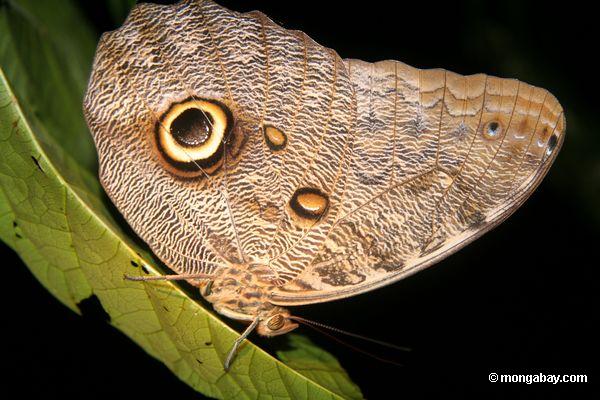 There are few things that are more commonly related to evolution than mimicry (or mimetism). By definition, mimicry is when an organism (aka the mimic) has evolved to look like another organism (aka the model) in order to survive. In most cases the model is of a different species than the mimic but that is not always the case contrary to common belief. Sometimes the mimic can be drawn back to a specific model (like the milk snake to the coral snake). But other times its impossible to say whose eyes a pair of eye spots is meant to be or camouflage that has not specific model. There are several different types of mimicry that go under 4 basic types: defensive, aggressive, reproductive, and auto mimicry.
 Defensive mimicry is when an organism uses mimicry to avoid potential danger or
 inconvenience. Defensive mimicry has 3 basic branches: Batesian, Müllerian, and Browerian mimicry. Batesian mimicry is where it only looks like potential danger to a predator (like a non-venomous milk snake. It may look like a coral snake, but that’s it.). It does not share the unsavory characteristics as the model but looks similar enough to fool its predators. Müllerian mimicry is where two or more species share the same defense mechanism and mimic each other to confuse predators. Both the mimic and the model benefit from the mimicry. Browerian mimicry is a form of auto mimicry that takes place within a species. The best way to explain this form is with monarch butterflies which eat milkweed of varying toxicities. They store the toxins inside of them so each butterfly (or larvae) has different toxin contents.
Aggressive mimicry is where a predator mimics a harmless species to avoid notice from their prey. This is could be done by mimicking the prey itself or a species that is neutral or beneficial to the prey. Luring (like the kind done by the Angler fish) is a prime example of Aggressive mimicry.

Reproductive mimicry is more common in plants where female plants mimic male plants of the same species to elude pollinators. Reproduction can cause shifts in color mimicry and was the reason two different species of butterflies formed (Heliconius melpomene and Heliconius cydn)
Auto mimicry happens inside of one species where one part of the body appears to be another part (e.g. a snake’s tail looking like a head or an owl with eyespots on the back of its head to fool predators into believing they are alert to their presence.)

For some species, mimicry is a great way to ensure survival.
Sources: Wikipedia.com
Semimoticon.com
Search.live.com/images

No comments:
Post a Comment